

Some people have spent 10, 15, even 20 years building a life in Miami. They have U.S. citizen children. They're married to U.S. citizens. They pay taxes, run a business, and are active members of their community. And yet, permanent residence has always seemed out of reach because of one persistent obstacle: they entered the United States without passing through an official port of entry.
That barrier — having entered without inspection — blocks the regular path to adjustment of status. But there is a legal mechanism that can change that picture completely: Parole in Place.
It's one of the most searched immigration topics on Google among the Latino community in 2025 and 2026 — and also one of the most confusing, since its legal status has shifted over the past two years. This article explains what it is, who qualifies, how it differs from regular adjustment of status, and what its real status is in 2026.
Below is the full breakdown of the program's current status and what every family needs to know before taking action.
What Is Parole in Place?
Parole in Place — also known as PIP — is an authorization the federal government can grant to people who are physically inside the United States but who entered without passing through an official port of entry and without being inspected by an immigration officer.
The legal concept of parole in immigration law allows the government to treat a person as though they had been admitted on parole — in other words, as if they had entered with an authorized provisional admission. That change in entry status has one fundamental consequence: it turns someone who was not eligible for adjustment of status into someone who potentially is.
Parole in Place is not a green card. It is not a visa. It is not, on its own, a work permit. It is the stepping stone that removes the obstacle keeping people who entered without inspection from accessing the adjustment of status process.
Historically, Parole in Place first existed for the family members of active-duty military service members — which is why the term "military parole in place" shows up in so many searches. In 2024, the Biden administration attempted to significantly expand the program for spouses of U.S. citizens under the Keeping Families Together initiative. That expansion was blocked in court, and its status in 2026 is complicated.
The Real Status of the Keeping Families Together Program in 2026
This is where the most confusion exists — and where having up-to-date information matters most.
In June 2024, the Biden administration announced the Keeping Families Together program, which offered Parole in Place specifically to spouses of U.S. citizens who had lived continuously in the U.S. for at least 10 years. An estimated 500,000 to 1 million people nationwide could have qualified.
In August 2024, a federal court in Texas blocked the program's implementation through a preliminary injunction, arguing that the executive branch had exceeded its authority. The case remained in litigation throughout 2025 — you can review AILA's analysis of the program.
With the change in administration in January 2025, the Keeping Families Together program was formally terminated by executive order. Applications that were still pending were left in significant uncertainty.
What this means in 2026: Parole in Place as a broad mechanism for citizen spouses, at the mass scale Biden proposed in 2024, is not operating. However, discretionary Parole in Place, based on individual cases with specific circumstances, still exists as an authority USCIS retains. This includes the original program for military family members.
This distinction is critical: anyone who sees ads, videos, or websites claiming that spouses of citizens can obtain Parole in Place en masse right now should verify that information with an immigration attorney before filing any paperwork or paying any fees. The legal landscape in 2026 requires an individual, case-by-case evaluation.
The Difference Between Parole in Place and Regular Adjustment of Status
To understand why PIP matters so much, you first need to understand what problem it solves.
Regular adjustment of status requires the person to have been "inspected and admitted or paroled" at an official port of entry. Someone who crossed without documents doesn't meet that requirement and, as a result, cannot file the I-485 directly — even if they are married to a U.S. citizen and have lived in the country for 20 years.
Consular processing — handled from abroad — could be an alternative, but it brings the problem of inadmissibility bars: anyone who has accrued more than one year of unlawful presence and leaves the country automatically triggers a 10-year bar under INA 212(a)(9)(B). Unless they obtain an approved waiver before traveling, that person cannot return for a decade.
Parole in Place solves exactly that problem. By granting a paroled entry status to someone already inside the country, it allows that person — provided they meet the other requirements — to file the I-485 without leaving. No triggering bars. No separation from family. No risk of being stuck outside.
When PIP was broadly accessible, many immigration attorneys considered it the most significant path available to people who entered without inspection. In the 2026 context, its availability is more limited — but for those who qualify under specific circumstances, it remains relevant.
Who Can Qualify in 2026?
Given the program's current status, the concrete Parole in Place paths that retain some degree of availability in 2026 are:
Family members of active-duty military, reservists, and veterans: this is the original PIP program and the most legally stable one. Spouses, children, and parents of active members of the U.S. Armed Forces who entered without inspection can apply for PIP under this category. The legal foundation is stronger than that of later expansion programs.
Individual discretionary parole: USCIS retains the authority to grant parole on a case-by-case basis in situations involving urgent humanitarian need or significant public benefit. This is not a mass pathway — it's an individual evaluation in which the attorney argues the specific merits of the case.
For anyone who believes they may qualify for some form of Parole in Place in 2026, a prior legal evaluation isn't optional — it's the first step. The consequences of filing incorrectly, or under a category that doesn't apply, can be worse than not filing at all.
What Documents Are Needed for a PIP Application?
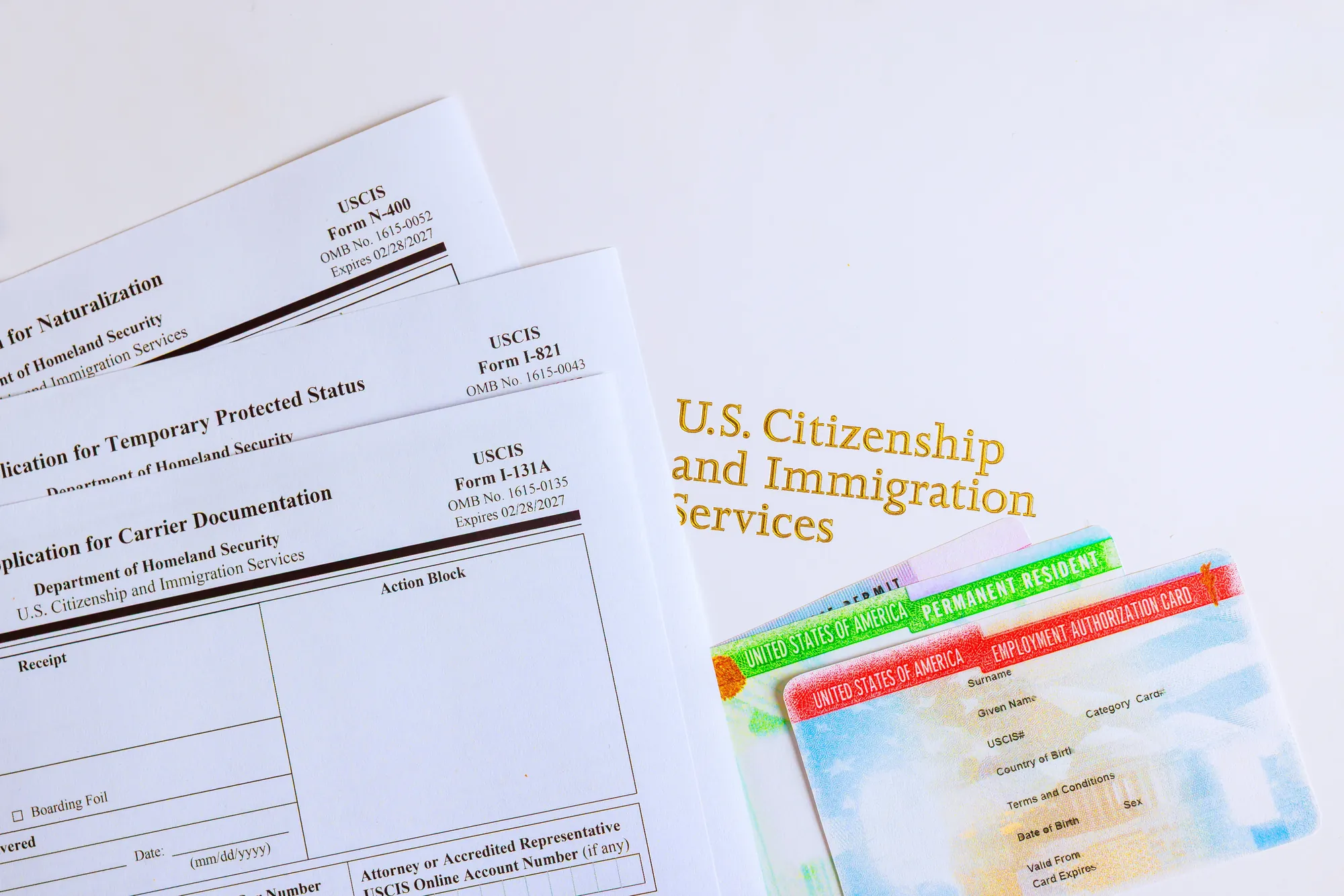
For the military family member program, the application is filed using Form I-131 (Application for Travel Document) with USCIS, along with:
- Evidence of the family member's military status (certificate of active-duty service, DD-214 documents for veterans)
- Evidence of the family relationship (marriage certificate, birth certificates as applicable)
- Evidence of entry and continuous presence in the U.S.
- Photographs in USCIS format and identity documents
If approved, the applicant receives a parole document that allows them to file the I-485 for adjustment of status.
HHA Law works closely with each family to gather the correct documentation and present the case in a way that reflects the real situation with the appropriate legal support.

If you entered without papers and have U.S. citizen family, there are paths you don't know about yet
The Parole in Place landscape in 2026 is complicated, but that doesn't mean there are no options. It means every case needs an individual evaluation from an attorney who stays current in real time. That's exactly what HHA Law does. Call us at (+1) 305-614-1690.
Schedule a Free ConsultationFrequently Asked Questions
Not in the form it was originally announced. The program was first blocked by the courts and then formally terminated with the change in administration in 2025. Anyone who sees advertising claiming mass access to this program in 2026 should verify that information with an attorney before acting or paying any fees.
Yes. The original program for spouses, children, and parents of active-duty military, reservists, and veterans maintains greater legal stability than the later expansion programs. If you have a family member in the U.S. Armed Forces, this path deserves an evaluation.
If your application is still pending, the situation in 2026 is uncertain. HHA Law can review the status of your specific case and evaluate the options available given the current circumstances.
On its own, the parole document may allow you to apply for a work permit. However, the correct sequence and strategy depend on your individual situation. Filing applications in the wrong order can complicate the main process.