

In 2024, more than 5,000 workers died in workplace accidents in the U.S., and Hispanics accounted for 22% of those fatalities according to the Bureau of Labor Statistics —a proportion higher than their share of the workforce.
That's not a statistical accident. It's the direct result of two realities converging in Miami's Hispanic community: the most physically dangerous jobs —construction, services, hospitality, transportation— and the silence that comes from fear of filing a claim.
That silence has a price. Medical bills that pile up. Lost wages. An injury that doesn't get the treatment it needs because no one explained there's a system designed exactly to cover it.
What Is Workers' Compensation in Florida and Who Does It Cover?
Workers' compensation in Florida is a mandatory insurance system that requires employers to cover medical expenses and a portion of lost wages for any worker injured on the job, regardless of who was at fault for the accident. In Florida, every employer with four or more employees must carry this coverage, whether the employee works full-time or part-time.
Workers' compensation is not a government benefit —it's insurance the employer is legally required to maintain. If the worker is injured on the job, this insurance covers the costs regardless of who caused the accident.
What it covers: authorized medical expenses, disability benefits equal to roughly 66% of the average weekly wage calculated over the 13 weeks before the injury, with a cap of approximately $1,100 per week in 2026.
What it doesn't cover: pain and suffering or the full amount of lost wages. That's why, in certain cases, there's the possibility of going beyond workers' comp with an additional lawsuit, explained further below.
The timeline for acting leaves no room to spare: the worker must notify the employer of the injury within 30 days of the accident, and has up to 2 years from the date of the accident to file the formal claim with the system.
An Injured Worker's Rights Regardless of Immigration Status
This is the most important point in this blog, and the one that can change the most lives if it reaches the right people.
Workers' compensation applies to all workers, regardless of immigration status. The vast majority of states, including Florida, have confirmed through state laws or court decisions that undocumented workers are covered by workers' compensation.
That means an undocumented Venezuelan worker who fell from scaffolding in Brickell has exactly the same rights under workers' comp as the American supervisor overseeing the job site. The law doesn't create the difference —fear does. And that fear, in many cases, is exactly what the employer is counting on to avoid paying what's owed.
Cash workers also have rights. Even if the employer pays in cash and doesn't report the income, the worker still has the right to workers' compensation. The fact that the employer is evading taxes doesn't eliminate that right —in fact, it can create additional problems for the employer, not for the worker.
If your employer threatened to report you to ICE after an accident, that threat can be illegal labor retaliation under federal law. HHA Law evaluates these cases. ☎️ 305-614-1690
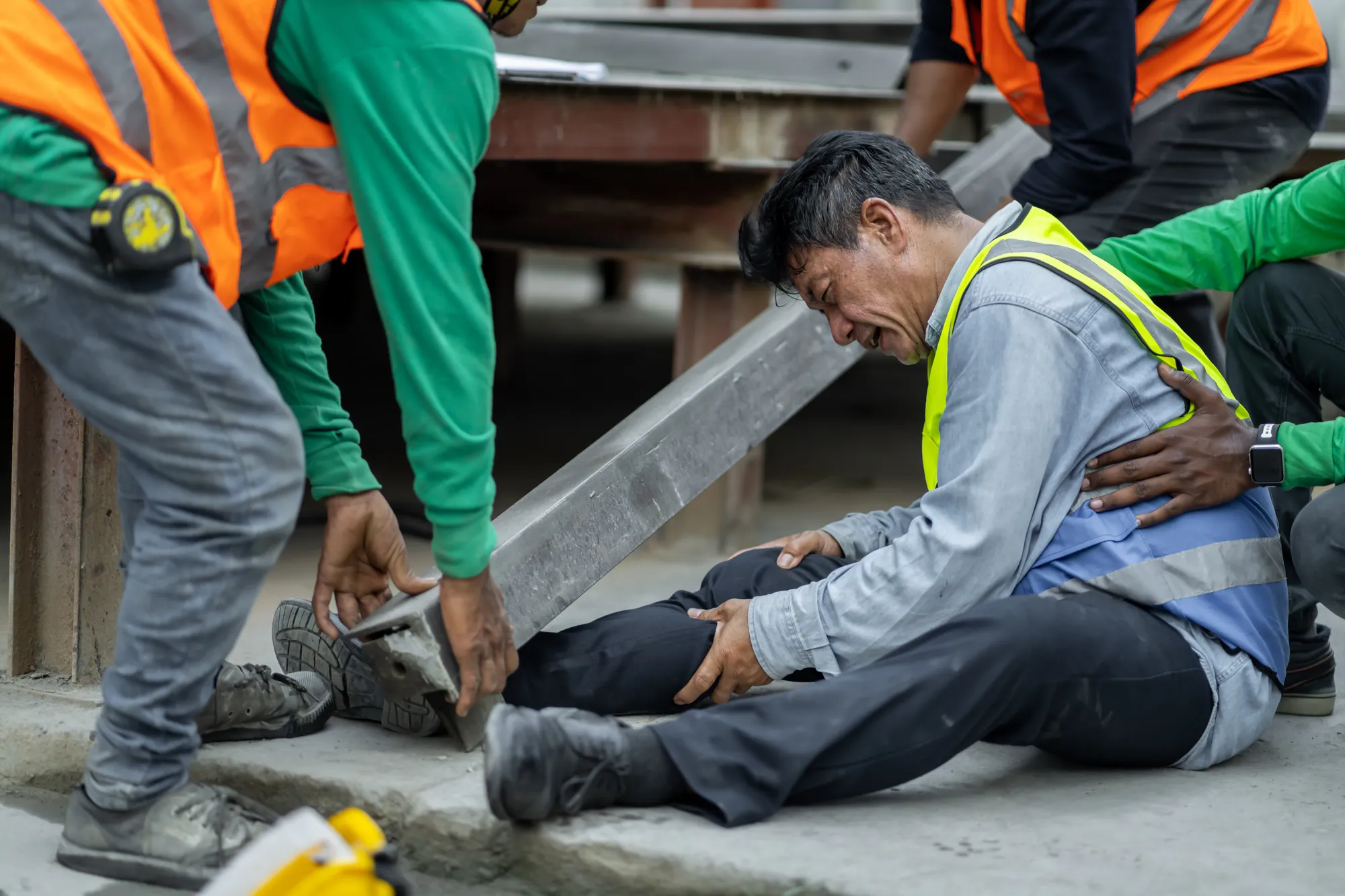
The Most Common Injuries Among Hispanic Workers in Miami
The most common injuries among Hispanic workers include falls from height —especially in construction and roofing—, injuries from heavy machinery, burns in kitchens and restaurants, back injuries from lifting, exposure to toxic chemicals in industrial cleaning and agriculture, and heat stroke from outdoor work.
Miami has conditions that amplify those risks. The construction boom downtown and in Brickell generates hundreds of simultaneous projects where work pace is intense and safety equipment isn't always available or properly used. Falls are the leading cause of death in construction in Florida, accounting for more than 35% of all workplace fatalities in the industry.
Hospitality and services —sectors where Miami's Hispanic community has a massive presence— generate their own pattern of injuries: back injuries from repetitive lifting, burns in industrial kitchens, slips on wet floors, and repetitive-motion injuries that build up over months before triggering a crisis.
All of these injuries are covered by workers' comp. Many of them also have grounds for an additional claim when there's negligence by the employer or a third party.
Mistakes Workers Make That Hurt Their Compensation
HHA Law has identified the same mistakes repeatedly in Hispanic workers' workplace accident cases. Not because of a lack of intelligence but a lack of information.
Not reporting the accident right away. The deadline is 30 days, but every hour that passes without an official report weakens the case. The employer can claim the injury didn't happen at work. Documentation from the very first moment is the difference between a solid case and a disputed one.
Seeking medical care outside the authorized system. The employer or insurance company has the right to direct the worker to an authorized doctor. If the worker seeks treatment without that authorization, the insurer can refuse to pay. The workers' comp system's doctor isn't necessarily the worker's doctor of trust, and that creates a tension that needs to be managed strategically with legal advice.
Accepting that "the accident was your fault" without consulting anyone. Employers and their insurers are experts at minimizing liability. "You didn't follow procedure" or "that equipment was fine" are claims that require evidence and whose accuracy should be evaluated by an attorney, not accepted as fact.
Not documenting the consequences of the injury. Missing medical appointments, not reporting new symptoms, not keeping a record of missed work time —all of that reduces the value of the case.
What If Your Employer Says the Accident Was Your Fault?
Under the workers' compensation system, fault doesn't determine eligibility for benefits. The system exists precisely to eliminate that debate: if you were injured at work, you have coverage, regardless of whether you followed safety procedure or not.
But fault does matter in another scenario: a negligence lawsuit against third parties or against the employer outside of workers' comp. Florida's workers' compensation laws generally bar a worker from suing their employer for negligence, but there are certain limited circumstances where it is allowed —such as when the employer had no insurance, when the employer disabled the equipment's safety guards, or when the employer ordered unsafe work knowing the risk.
Additionally, if a third party contributed to the accident —a subcontractor, the manufacturer of defective equipment, the owner of the property where you were working— there may be an additional negligence claim that workers' comp doesn't cover but that an attorney can identify.
The Difference Between Workers' Comp and a Negligence Lawsuit
Workers' compensation and a negligence lawsuit are not the same thing, and they aren't mutually exclusive in every case either.
Workers' comp: automatic benefit, no need to prove the employer's fault, covers medical expenses and part of lost wages, doesn't cover pain and suffering, administrative process before the Florida Division of Workers' Compensation.
Negligence lawsuit: requires proving fault of a third party or the employer under specific conditions, can cover 100% of damages including pain and suffering and reduced future earning capacity, court process with the potential for significantly higher compensation.
HHA Law evaluates both possibilities in every workplace accident case. In many cases involving Hispanic workers in Miami, the optimal claim combines workers' comp as immediate protection with an additional lawsuit seeking full compensation.

Frequently Asked Questions About Workplace Accidents in Florida
Am I entitled to workers' compensation if I'm undocumented?
Yes. Florida's workers' compensation law protects all workers regardless of immigration status. Exercising that right does not trigger any immigration process. If your employer threatened to report you to ICE in response to an accident, that could constitute illegal labor retaliation.
What happens if my employer doesn't have workers' compensation insurance?
If your employer was required to have it and didn't, you can file a claim with the Florida Division of Workers' Compensation, which manages a special fund for these cases. You may also be entitled to sue your employer directly for negligence —something that normally isn't available when insurance does exist.
Do I have to see the doctor my employer or their insurer chooses?
In most cases, yes, under the workers' comp system. You're entitled to a second opinion under certain conditions and to request a change of doctor under specific circumstances. HHA Law can advise you on how to handle this part of the process without harming your case.
Can I lose my job for filing a workers' compensation claim?
Florida law prohibits your employer from firing you as direct retaliation for filing a workers' compensation claim. If your employer takes punitive action after you file your claim, that can be grounds for an additional retaliation claim.
If you got hurt at work in Miami, act this week. Time matters in workplace accidents. Evidence disappears, witnesses forget, deadlines run out. HHA Law works with injured Hispanic workers in Miami-Dade. A consultation can determine exactly what rights you have and how to exercise them.
Your employer's insurer already has attorneys from day one. You should too. ☎️ 305-614-1690

Were you hurt at work and don't know what rights you have?
The initial consultation is free and handled entirely in Spanish.
Schedule a Free Consultation